
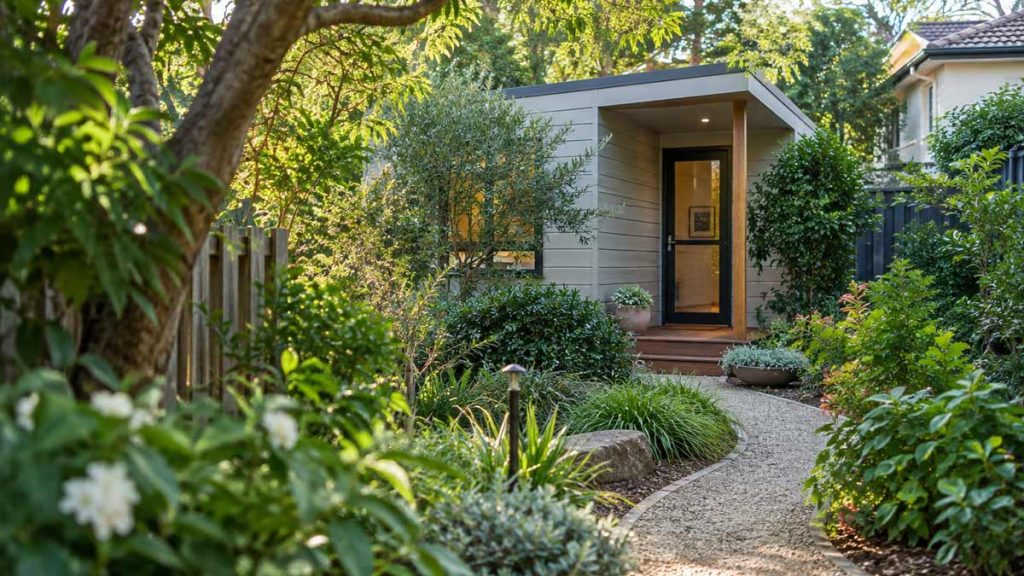
Building, renting or creating occupancy rights for a granny flat can have significant capital gains tax consequences.
Granny flats are becoming more of a common feature of the urban environment. No doubt this is due to the ongoing and unremitting nature of the housing affordability crisis, and the relaxing of regulations about where and how they can be built.
And they do seem to offer a very viable solution to the problem – at least in the short term.
However, if you are thinking of constructing one, or already have one in place, you need to be aware of all the tax implications – and they can be very significant.
Firstly, if you rent it at commercial or arm’s length rates, then not only will you be assessable on the rent (albeit being able to claim a portion of the deductions), but you will lose a part of the capital gains tax (CGT) exemption on your home. This is because you are using your home to produce income.
But in most cases, this partial CGT liability should be taxed concessionally by giving you a market value cost (at the time you first rent it) from which to calculate the gain (or loss).
Furthermore, the CGT 50% discount (or whatever is in place after the May Budget) should, in most cases, be available to reduce the amount of your assessable income.
However, where you do not rent your granny flat at commercial rates (including where the occupants may only pay their share of outgoings, such as electricity and rates) then you may not lose any CGT exemption on the home.
This will typically be the case where your granny flat is occupied by a relative, such as an adult child – or by a granny (and/or granddad), themselves!
It should also be noted that it is becoming common for the owner of the home (young adult children) to come to some sort of agreement with a parent or parents, whereby the parent/s agree to pay the price for building the granny flat in exchange for the “right to occupy” for a number of years. Likewise, such agreements may bring to an end a right to occupy.
The making of an agreement whereby “granny-flat” rights are created in another party (or bought to an end) can technically have immediate CGT consequences – despite the fact that it is made in relation to the CGT-exempt home and among family members.
However, the CGT rules provide that this will not be the case where the person acquiring the granny flat right has reached pensionable age (or has a relevant disability) and the arrangement is in writing and is not of a “commercial” nature.
These and other granny flat arrangements require good professional advice – particularly in terms of determining if such an agreement is “commercial”.
So, if you currently own a granny flat or you are thinking of constructing one for any purpose, it is important to come and speak to us – especially in terms of preserving the CGT exemption on your home (or at least maximising it).
Thinking about building or renting out a granny flat?
Granny flat arrangements can have significant tax implications, particularly when the property is rented or occupancy rights are created for a family member. Before building a granny flat, entering into an occupancy agreement or accepting payments, speak with Stratogen Accounting about how the arrangement could affect the CGT exemption on your home.
Our experienced accountants and advisors can help you understand the potential tax consequences, structure the arrangement appropriately and preserve as much of your CGT exemption as possible.
Based in Noosa, our experienced team of accountants and business advisors support clients throughout the Sunshine Coast and Australia-wide. From tax compliance and bookkeeping to strategic planning, risk management and long-term wealth creation, Stratogen is here to strengthen your financial position and support your success.
This information has been prepared without taking into account your objectives, financial situation or needs. Because of this, you should, before acting on this information, consider its appropriateness, having regard to your objectives, financial situation or needs.